
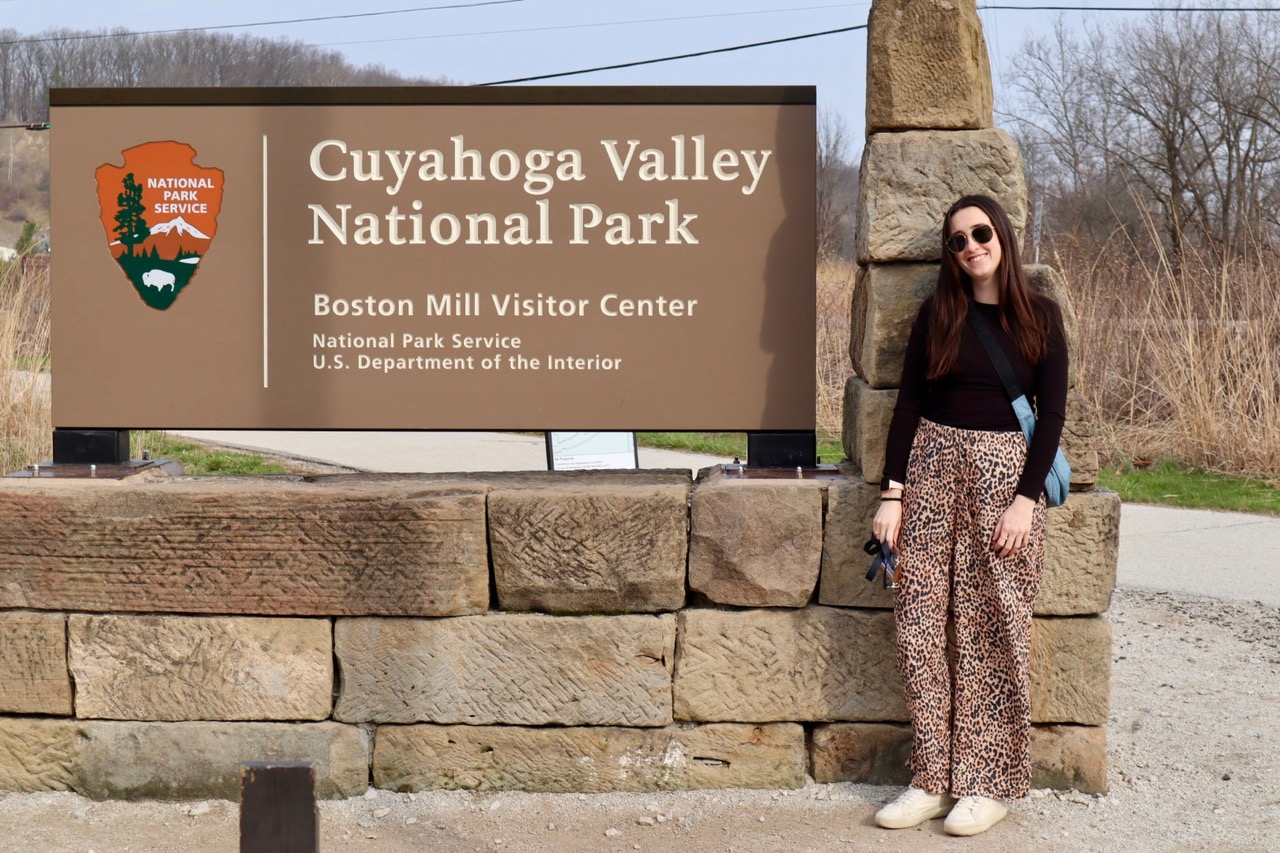
As A Girl Who Grew Up in New York
By Sarah Mayerhofer (2025)
Earlier this month, I traveled to Cleveland, Ohio, for the 2026 Midwest Climate Summit held at Case Western Reserve University. This was my second time attending the conference. Last year, I had such a great experience in Madison, Wisconsin, so I was excited to return and see what this year would bring.
What I found, once again, was not just a conference, in your typical sense, but a gathering of people trying to imagine what it means to live well, care for one another, and respond to a changing world with honesty and courage.
One of the biggest things I took away from the summit is that community is still the best tool we have. Again and again, I saw that the real strength of this work is not just in policy or technology, but in resource sharing, relationship building, mutual support, and people showing up for one another. So many of the conversations I attended came back to the same truth: we cannot face climate change in isolation. We need each other. We need local knowledge, trusted networks, and spaces where people can learn from one another and build real resilience together.
Another thing that stood out to me was how clearly women are leading the way in resilience, climate mitigation, and preventing burnout. This was evident not only in the range of speakers, but in the people attending the resilience-focused sessions and in the conversations happening both during and after them. Women were asking thoughtful questions, naming the hard things out loud, offering solutions, and articulating their concerns with clarity and vision. It really hit me how much women are shaping the climate field, especially in the spaces that ask us to care not just about systems, but about people.
One of the more memorable moments of the conference came on the second night, when Cleveland reminded us that no place is untouched by climate reality. The Midwest is often talked about as a strong region for climate migration, and in many ways it is. Compared with other parts of the country, it can seem more buffered from certain climate impacts. But it is not immune. That became very real when all 500 of us at the conference had to go down to the basement of Case Western Reserve University because of a tornado warning. I think it was a stark reminder of why we were all together. Climate change is not a future concept or a distant threat. These “unique” weather events are feeling less and less unique. It is already reshaping where and how we live, including in places many people think of as “safer.”
Another idea that has stayed with me came from a storytelling session. A few people were discussing books, movies, and the ways our culture portrays climate change. During that conversation, someone brought up the word frontier. Not in the traditional sense, but as a way of describing a threshold — something that is ending and something else that is beginning.
That language really struck me.
It feels like the moment we are in right now. There is so much uncertainty, so much unraveling, and so much that feels unsustainable. I do not know exactly what is ending, and I do not know exactly what is beginning. But I do know that many of us can feel it. We are standing in between worlds, on the edge of something we cannot fully name yet. And for all the fear that can come with that, I also think there is possibility there. It feels like we are on the cusp of something meaningful, maybe even something better, if we are willing to help shape it.
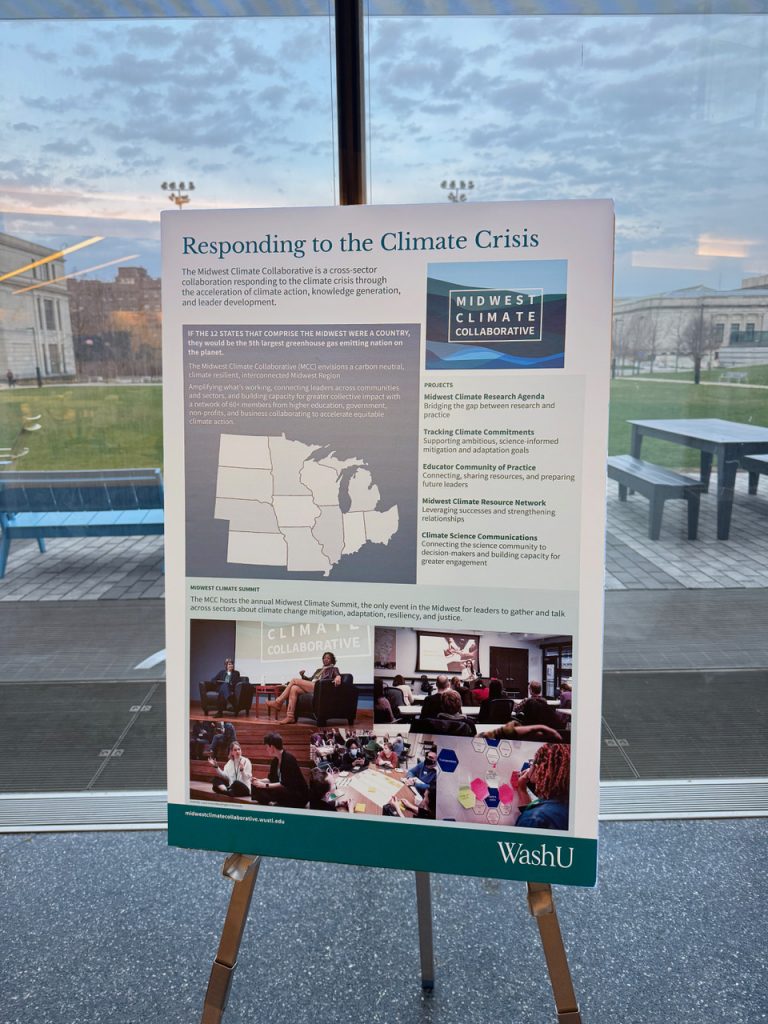
As someone who grew up in New York and on the East Coast, I also found myself reflecting on what feels different about the Midwest. There is a strong sense of community here that feels deeply rooted. Even the sessions at the summit reflected that. So much of the conversation centered on preparedness, local networks, collective care, and what it means to belong to a place and to each other. That emphasis stood out to me. The Midwest seems to understand, in a very lived way, that resilience is not just about infrastructure. It is about relationships. It is about knowing your neighbors, sharing resources, and building systems that people can actually rely on when things get hard. This is what I love the most about the Midwest.
That may be the lesson I carry with me most.
The Midwest Climate Summit reminded me that climate work is not only about preventing disaster. It is also about building the kinds of communities we will need in order to endure, adapt, and care for one another through what is coming. It is about imagination, honesty, and connection. And maybe most of all, it is about remembering that even in uncertain times, we are not powerless when we are together.
Leave a Reply
You must be logged in to post a comment.